Key takeaways
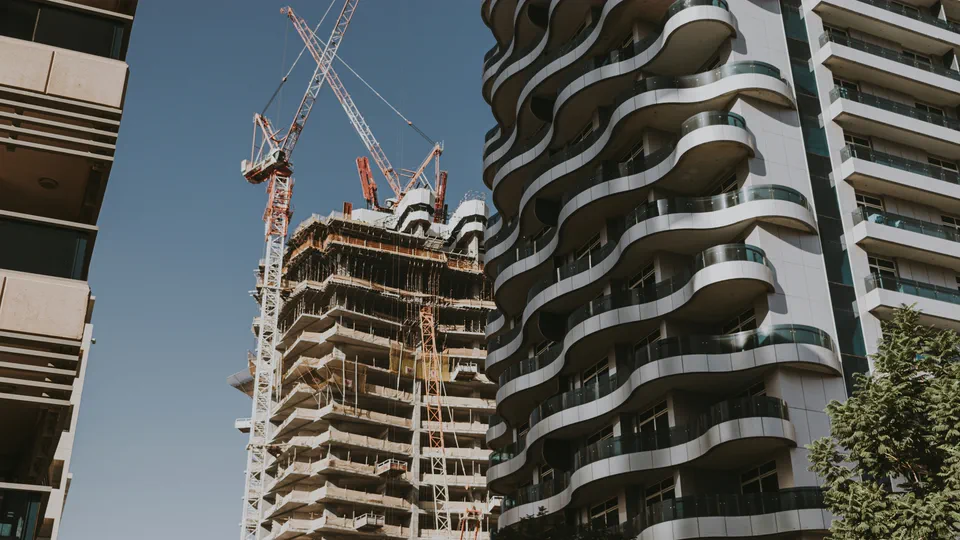
- Cushman & Wakefield Core expects about 55,600 homes to be delivered in Dubai in 2026, the most since 2008, and off-plan made up 72% of home purchases in Q3 2026, according to Cavendish Maxwell.
- A handover mortgage pays the developer what you still owe once the home is finished. While a home is being built, Central Bank rules cap any loan at 50% of its value. At handover the bank lends against a completed home, up to 80% of its valuation for an expat's first home under AED 5M.
- The bank tests your income at today's rates, not the rates of the day you booked. On our example AED 800,000 loan, the stress test needs a verified income of about AED 12,200 to AED 14,300 a month, with no other debts.
- Miss the handover payment on a home that is over 80% complete and, after a 30-day notice through the Dubai Land Department, the developer can ask for the unit to be sold or cancel the contract and keep up to 40% of its value. Start 3 to 6 months ahead.
For most off-plan buyers, the biggest cheque comes last. You pay the booking deposit, then instalments while the tower goes up, and then the developer asks for the rest on completion. On a typical plan that last payment can be 30% or 40% of the price, and it falls due on the developer's timetable, not yours.
This year a lot of people are reaching that point at once. Below is what decides whether a bank will cover that final payment, how your payment plan and the bank's valuation change the cash you need, and what happens if the money is not there on the day.
What is a handover mortgage?
It is an ordinary home loan, taken when your off-plan home is finished, that pays the developer the balance you still owe. The bank sends the money to the developer, the Dubai Land Department registers the mortgage on your property, you get the keys, and from then on you repay the bank in monthly instalments over up to 25 years.
Most buyers fund the construction years themselves because that is how off-plan payment plans are built. AGBI reported in July that Dubai plans usually ask for a deposit of about 10% to 20% to secure the unit, 50% to 75% in instalments during construction, and the remainder on handover, typically over three to four years and with no interest on the payments. The Central Bank's rules also shape lending during construction: a bank that finances stage payments must use the buyer's own money first, and pay the developer only against completion milestones confirmed by the bank itself or by an independent professional.
Why are so many buyers facing handover now?
Because the off-plan boom of the last few years is now being delivered. Cushman & Wakefield Core counted more than 23,600 homes handed over in Dubai in the first half of 2026, with about 32,000 more expected in the second half. That would make around 55,600 for the year, the highest annual total since 2008. It also expects actual deliveries over the next few years to fall well below what is scheduled, so completion dates can slip.
And off-plan is still most of the market. Cavendish Maxwell found that off-plan made up 72% of Dubai home purchases and 65% of sales value in Q3 2026. New launches are still selling: on 22 November, The National reported that all 977 villas and townhouses in the first phase of a new project near Palm Jebel Ali had sold, for AED 5.5 billion. Each of those homes still has to be built and handed over.
How much can a bank lend at handover?
Two Central Bank limits matter, one before completion and one after. While a home is still being built, the mortgage regulations cap the loan on an off-plan purchase at 50% of the value for every buyer. A handover mortgage is taken once the home is finished, so the bank is lending against a completed property and the limits for completed homes are the ceiling:
| Buyer and property | Maximum loan |
|---|---|
| Expat, first home under AED 5M | 80% of the value |
| Expat, first home over AED 5M | 70% |
| UAE national, first home up to AED 5M | 85% |
| UAE national, first home over AED 5M | 75% |
| Second home or investment property | 60% for expats, 65% for UAE nationals |
Central Bank of the UAE, Regulations Regarding Mortgage Loans, Article 3. Property bought off-plan and still under construction: 50% for every buyer.
Three things then decide your actual loan. First, the percentage applies to the bank's valuation, not the price you agreed when you booked: the regulations define loan-to-value against the appraised value. Second, the loan only covers what you still owe the developer. Third, you have to pass the bank's income test, which the next sections cover.
How does your payment plan change the cash you need?
Take an expat buying a first home for AED 2,000,000, and suppose the bank values it at AED 1,900,000 at handover, 5% below the price. The bank can lend up to 80% of that, AED 1,520,000. Here is what that means on three different plans:
| Payment plan (before / on handover) | Due at handover, AED | Loan limit, AED | Cash still needed, AED |
|---|---|---|---|
| 60 / 40 | 800,000 | 1,520,000 | 0 |
| 50 / 50 | 1,000,000 | 1,520,000 | 0 |
| 20 / 80 | 1,600,000 | 1,520,000 | 80,000 |
Our example. Fees come on top in every case. The loan limit is 80% of an AED 1,900,000 valuation.
The lesson is simple: the less you pay before handover, the more the final payment depends on the bank. On a 60/40 plan there is plenty of room even with a low valuation. On a plan that leaves 80% for handover there is none, so a valuation below the price, or an income that supports a smaller loan, turns straight into cash you must find. If the home is a second property, the limit drops to 60% for expats, AED 1,140,000 on the same valuation, which still covers the 60/40 and 50/50 plans but leaves the 20/80 plan AED 460,000 short.
Will you pass the bank's income test at today's rates?
Many buyers booked when rates were lower. 3-month EIBOR, the benchmark most variable UAE mortgages follow, was 3.44% on 7 January 2026 and 4.32% on 20 November, according to the Central Bank's fixings on our EIBOR rates page. The bank will judge you on the rate at handover. Our November rate update covers where rates may go next.
Take the 60/40 plan above: an AED 800,000 loan over 25 years. At 4.32% EIBOR plus an example margin of 1.50%, so 5.82%, the payment is about AED 5,067 a month. At January's EIBOR it would have been about AED 4,649, so AED 418 a month less. The bank also has to stress test the loan:
| Test | Rate | Monthly payment, AED | Income needed, AED a month |
|---|---|---|---|
| Example rate today | 5.82% | 5,067 | 10,133 |
| Stress test, 2 points higher | 7.82% | 6,079 | 12,159 |
| Stress test, 4 points higher | 9.82% | 7,168 | 14,337 |
Our calculations: repayment loan, monthly instalments, no other debts. Income needed is twice the payment, because all repayments together can take at most 50% of income.
The Central Bank requires lenders to run this test 2 to 4 percentage points above the current rate, and all your repayments, including car loans and card limits, can take no more than 50% of your income. So this buyer needs a verified income of at least about AED 12,200 to AED 14,300 a month with no other debts. A low fixed rate does not get round it: where an introductory rate applies, the test uses the rate that will apply after it ends. Our salary guide and DBR calculator go through the test with your own numbers.
What happens if you cannot pay at handover?
It can get expensive quickly. Under Dubai's off-plan law, as explained in Gulf News in April, a developer whose buyer defaults must notify the Dubai Land Department, which sends the buyer an official 30-day notice to pay. If the money still does not arrive and the project is more than 80% complete, the developer can keep the contract in place, ask the Dubai Land Department to sell the unit, or cancel the contract and keep up to 40% of the property's value.
A finished home at handover is past that 80% mark. That is why the mortgage should be arranged before the developer's notice arrives, not after it. If you are struggling, the same explainer's advice is not to ignore the notice but to talk to the developer early, for example about a revised payment plan or its agreement to sell the property.
What does a handover mortgage cost?
The large Dubai Land Department fee is usually behind you. For an off-plan sale, the DLD's registration fee of 2% from the buyer and 2% from the developer is charged when the developer registers the sale in the provisional (Oqood) register, which must happen within 90 days of signing. At handover, expect:
- Mortgage registration: 0.25% of the loan, plus small title deed charges (AED 250 for the title deed and AED 20 in knowledge and innovation fees), on the DLD's mortgage registration page. On an AED 800,000 loan that is AED 2,270.
- Trustee office fee: if the mortgage is registered through a trustee centre, the DLD lists AED 4,000 plus VAT, or AED 5,000 plus VAT when the property is still on the provisional register.
- Bank fees: a processing fee and a valuation fee. At one large Dubai bank we checked on 23 November these were 1.05% of the loan and AED 3,150 for a completed property, both including VAT. Some banks run handover offers: one Abu Dhabi Islamic bank advertises special profit rates for financing handover payments to developers.
- Insurance: life and property insurance are normally required for the life of the loan.
Check your sale and purchase agreement as well for anything the developer asks for at handover besides the balance, such as service charges. Those come out of your own pocket.
When should you start the handover mortgage?
Earlier than most people think, because dates can move and every step needs paperwork:
- Six months before the expected handover: work out the exact amount due under your plan, add the fees, and check your income against the stress test above. Pay down or cancel card limits you don't use.
- Three months before: get a pre-approval for the handover amount, so you know which bank will lend and roughly how much. Our pre-approval guide covers the documents.
- When the developer announces completion: the bank values the finished home and issues its final offer. Read the offer's rate, margin, fixed period and fees before you sign.
- Registration day: the developer issues a no-objection certificate, which the DLD requires for a mortgage on a property sold off-plan, the mortgage is registered, the bank pays the developer, and you collect your keys.
Can you get a mortgage before handover instead?
Sometimes, but it is a different product. Some banks now finance off-plan homes during construction, within the Central Bank's 50% cap. Khaleej Times reported in August that one Dubai Islamic bank launched finance of up to 50% of the value that pays the developer in stages as construction milestones are reached, with the buyer paying only the profit until handover or for up to 24 months, whichever comes first. An Abu Dhabi bank working with a Dubai developer offers pre-approval of up to 50% for off-plan buyers, valid for 12 months and renewable each year until handover.
These can help if your plan asks for large instalments during construction. For most buyers, though, the handover mortgage remains the main event: it is the point where the full completed-home limit opens up, and where your valuation, your income and the rate on the day decide how much cash you need.
If your handover is in the next six months, now is the time to run the numbers. Our advisors compare 20+ UAE banks on your actual plan and income, and in most cases it costs you nothing as a buyer.
Quick questions, quick answers
What is a handover mortgage in Dubai?
It is a home loan taken when an off-plan property is finished, used to pay the developer the balance still owed under the payment plan. The bank pays the developer, the Dubai Land Department registers the mortgage, and the buyer then repays the bank monthly over up to 25 years.
How much can I borrow at handover?
Once the home is complete, the Central Bank of the UAE limits for completed homes apply: up to 80% of the bank's valuation for an expat's first home under AED 5M, 85% for UAE nationals, and 60% for an expat's second or investment property. The loan only covers what you still owe the developer, and you must pass the income test.
When should I apply for a handover mortgage?
Start about six months before the expected handover by checking the amount due, the fees and your income, and get a pre-approval about three months before. The bank values the finished home once the developer announces completion, and the mortgage is registered when you pay the developer.
Do I pay the 4% DLD fee again at handover?
No. For an off-plan sale, the Dubai Land Department fee of 2% from the buyer and 2% from the developer is charged when the developer registers the sale on the provisional (Oqood) register, within 90 days of signing. At handover the mortgage adds 0.25% of the loan plus small title deed charges.
What happens if I cannot pay the developer at handover?
The developer must notify the Dubai Land Department, which sends a 30-day notice. If you still do not pay and the project is over 80% complete, the developer can keep the contract, ask for the unit to be sold, or cancel it and keep up to 40% of the value, as Gulf News explained in April 2026.
Can I get a mortgage before my off-plan home is finished?
Some banks now offer finance during construction, capped by the Central Bank at 50% of the value for any off-plan purchase. One Dubai Islamic bank pays the developer in stages as construction milestones are met. Most buyers still fund construction themselves and take the mortgage at handover.